Hyperliquid app Is a mobile access and availability guide
Hyperliquid app Is best understood as the mobile way people access Hyperliquid markets, usually through the official web interface and, where available, verified mobile options. A user searching for the Hyperliquid app should first confirm the current official entry point, avoid lookalike downloads, and understand that trading on a fast decentralized derivatives platform carries liquidation, wallet, bridge, and market risk.
Hyperliquid app interest has grown because many traders want the speed of an exchange interface without giving up the onchain settlement and wallet-based control associated with DeFi. The phrase can refer to a phone browser session, a progressive web app saved to a home screen, or a native mobile listing if one is officially linked by Hyperliquid. Because fake crypto apps appear frequently, the safest habit is to treat every download prompt, search result, and sponsored listing as untrusted until it is verified through official Hyperliquid channels.
Hyperliquid app access matters most when a trader needs to check positions, monitor margin, manage orders, or respond to volatility away from a desktop. The protocol itself is known for perpetual futures, spot markets, vault-style strategies, API-driven trading, and a broader ecosystem around HyperCore and HyperEVM. Mobile convenience does not remove the need for careful setup. A small screen can make it easier to rush order entry, miss leverage details, or approve a wallet action without reading it.
What is Hyperliquid app?
Hyperliquid app is a practical search term for the mobile experience around Hyperliquid, a decentralized trading venue built for high-speed crypto markets. Unlike a traditional brokerage app, the experience usually depends on a connected wallet, network-specific deposits, and an interface that routes actions to the protocol. Users may arrive through a browser, a saved web app icon, or an officially promoted mobile application depending on device, region, and the latest release status.
The protocol is most often discussed in relation to perpetual contracts, spot trading, order books, liquidations, funding rates, and portfolio monitoring. Hyperliquid app users therefore need to understand more than installation. They need to know how collateral moves, what happens when leverage is used, how limit and market orders behave, and why mobile notifications should support risk management rather than replace it.
Hyperliquid app also sits in a crowded mobile crypto environment. Some wallets and third-party interfaces may integrate Hyperliquid markets or offer simplified access. Those tools can be useful, but they are not automatically the same as the official Hyperliquid app experience. Before connecting a wallet or depositing funds, users should check whether a tool is official, third-party, custodial, non-custodial, audited, regionally available, and transparent about fees.
Does Hyperliquid app exist on iPhone and Android?
Hyperliquid app availability can change, so the careful answer is that users should verify the current iPhone and Android status directly from official Hyperliquid sources before installing anything. In many cases, mobile access can work through the browser-based interface, which may be added to a phone home screen like a progressive web app. Native app availability may differ by operating system, country, and release phase.
Hyperliquid app searches in app stores can be confusing because unrelated or unofficial listings may use similar names, icons, or descriptions. This is a common problem across crypto, especially for exchanges, wallets, staking tools, and portfolio trackers. If a listing is not linked from the official website or an official announcement channel, users should avoid connecting a wallet, importing keys, or approving transactions through it.
For a new user, the safest mobile path is usually to start from the known official web domain, confirm the application URL, and then decide whether a home screen shortcut or verified store app is appropriate. A browser-based Hyperliquid app workflow may be enough for checking markets, managing small test transactions, or learning the interface. More active traders may still prefer desktop for chart layout, order book depth, keyboard speed, and clearer margin review.
How does Hyperliquid app work with wallets and markets?
Hyperliquid app workflows begin with wallet connectivity rather than a conventional username and password account. The user connects a compatible wallet or approved access method, reviews permissions, and uses the interface to deposit, trade, withdraw, or interact with supported ecosystem features. Because this is a crypto trading environment, private keys, wallet approvals, device security, and phishing protection are part of the product experience.
Hyperliquid app trading generally revolves around selecting a market, reviewing price data, choosing an order type, setting size, and confirming the action. Perpetual futures add extra considerations such as margin, leverage, funding, liquidation price, open interest, and volatility. Spot trading may feel simpler, but it still involves liquidity, slippage, token risk, and withdrawal planning. Mobile users should slow down before each confirmation because one mistaken tap can create a real financial outcome.
The protocol can feel closer to a centralized exchange in speed and interface design while retaining important onchain characteristics. That combination is attractive, but it also means Hyperliquid app users should not assume the protections of a bank, broker, or regulated securities platform. Wallet-based access gives flexibility, yet it also puts more responsibility on the user to verify routes, contracts, balances, and device integrity.
How to get started with Hyperliquid app safely
Hyperliquid app setup should begin with verification, not funding. Before making a deposit, a user should confirm the official website, read the current access instructions, check regional restrictions, and understand whether they are using the official interface or a third-party mobile layer. It is reasonable to test the flow with a small amount first, especially when using a new wallet, bridge, device, or network path.
- Start from the official Hyperliquid website or a verified official channel.
- Confirm whether mobile access is browser-based, PWA-based, or a verified native app.
- Use a secure wallet, updated operating system, and private network connection.
- Review deposits, order settings, leverage, and withdrawal options before trading.
- Test with a small transaction before relying on the workflow for larger balances.
Hyperliquid app users should also separate learning from trading. Explore the interface, watch how markets update, and understand where order history, open positions, margin, and balances appear before placing meaningful orders. A mobile screen compresses information, so the best setup is one where essential numbers are easy to read and confirmations are deliberate rather than automatic.
For readers comparing setup routes, this can be paired with a basic wallet review before funds are moved. Hyperliquid app convenience is useful only when the entry point is authentic and the user understands the mechanics behind each transaction.
What can traders use Hyperliquid app for?
Hyperliquid app use cases range from quick market checks to active position management. A casual user might open the interface to review HYPE market activity, scan spot prices, or check whether an existing position needs attention. A more experienced trader may use it to adjust limit orders, close part of a perpetual position, monitor funding rates, or react to sudden volatility when away from a larger trading setup.
Hyperliquid app can also support ecosystem discovery. HyperEVM activity, vaults, third-party dashboards, API tools, and wallet integrations may all shape how users interact with the broader Hyperliquid environment. Not every feature belongs on a small screen, though. Strategy design, leverage planning, tax record review, and multi-market analysis are usually easier on desktop, where charts and position data can be viewed together.
In practice, mobile access is strongest for monitoring and controlled execution. It is weaker when a user is tired, distracted, or trading during extreme market conditions. Hyperliquid app users should decide in advance which actions they are comfortable taking on a phone. For example, closing a position or reducing exposure may be reasonable, while opening a complex leveraged trade during a fast move may deserve a full desktop review.

Benefits of using Hyperliquid app for mobile access
Hyperliquid app benefits start with availability. A trader does not always have a desktop open, and crypto markets move around the clock. Mobile access can help users notice margin changes, review balances, and respond to order fills. Notifications, when available and configured carefully, may help users track alerts without constantly refreshing charts.
Hyperliquid app access can also reduce friction for routine tasks. Checking a wallet connection, viewing open positions, confirming a withdrawal status, or scanning top markets can be simpler from a phone. For users already familiar with decentralized exchanges, the ability to connect a wallet and manage positions without a centralized login can feel efficient.
The main benefit, however, is not speed by itself. The stronger benefit is informed control. Hyperliquid app workflows can help users stay closer to their risk profile when they are away from a desk, provided they use sensible position sizing and avoid impulsive trades. Mobile access should support a plan that already exists rather than create a reason to trade more often.
Risks and safety checks before using Hyperliquid app
Hyperliquid app safety starts with the assumption that crypto search results are noisy. Fake applications, cloned websites, malicious wallet prompts, and social media impersonation are persistent threats. Users should never enter seed phrases into a trading app, never install from an unverified link, and never approve wallet permissions they do not understand. A hardware wallet or separate trading wallet may reduce exposure, but it does not make careless approvals safe.
Hyperliquid app trading risk is also market risk. Perpetual futures can liquidate quickly when leverage is high, liquidity shifts, or prices gap during volatile conditions. Funding rates can change, spreads can widen, and a phone connection can fail at a bad moment. There is no guaranteed outcome, and this page should not be read as financial advice. Users should verify all current product details, fees, and restrictions with official sources.
Hyperliquid app users should build a short safety routine before every session. Confirm the URL or verified app source, check the connected wallet, review order size, inspect leverage, and know the withdrawal path. A more detailed can help users create a repeatable review process before they trade or transfer funds.
How does Hyperliquid app compare with other mobile crypto trading options?
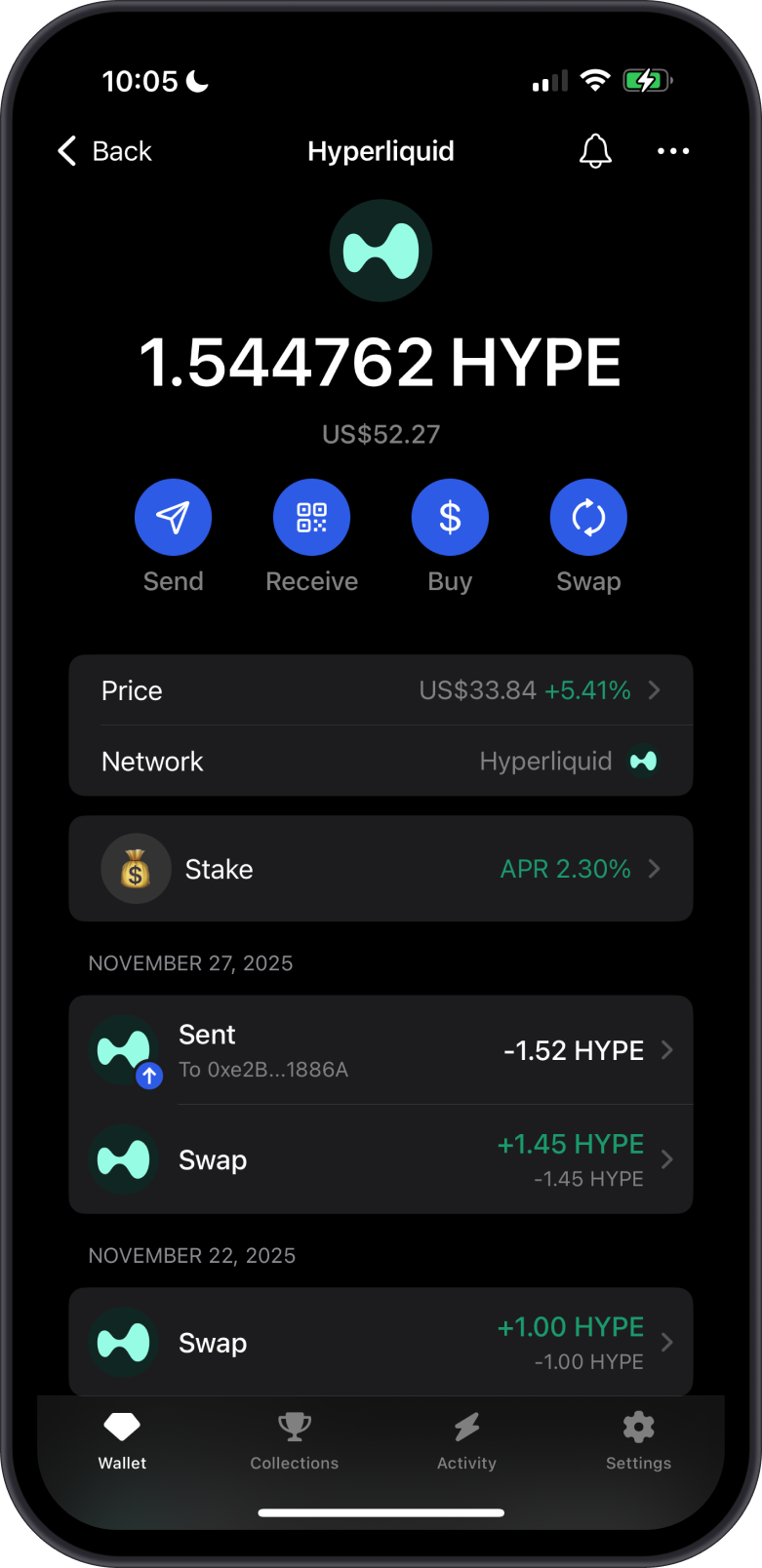
Hyperliquid app comparisons depend on what the user values. Centralized exchange apps may offer fiat onboarding, account recovery, customer support, and simpler tax exports, but they require custody or account-based trust. Wallet apps may offer broad token access and DeFi browsing, but their trading depth can vary. Dedicated third-party Hyperliquid interfaces may improve mobile usability, but they introduce another software provider to evaluate.
| Option | Typical strength | Main caution |
|---|---|---|
| Official Hyperliquid interface | Direct access to the core trading experience | Users must verify the exact official entry point |
| Mobile browser or PWA | No separate app store install required | Phishing URLs and small-screen mistakes remain possible |
| Third-party wallet or trading app | May simplify onboarding or mobile layout | Custody model, permissions, and fees must be reviewed |
| Centralized exchange app | Often easier for fiat funding and support | Custody, withdrawal limits, outages, and regional rules vary |
Hyperliquid app may appeal most to users who already understand wallet-based trading and want direct exposure to the Hyperliquid ecosystem. Beginners may prefer to study order types and wallet security before trading. Advanced users may combine mobile monitoring with desktop execution, API tools, or portfolio dashboards. The right choice depends on skill level, jurisdiction, risk tolerance, and whether the user needs self-custody or convenience.
What should users remember before relying on Hyperliquid app?
Hyperliquid app is useful when it is treated as a verified access method, not merely a name typed into an app store. The central question is not only whether a mobile app exists today, but whether the specific route in front of the user is official, current, secure, and appropriate for the action they plan to take. That mindset prevents many avoidable mistakes.
Hyperliquid app access can make decentralized trading more convenient, but convenience and safety are not the same thing. Users should confirm availability, protect wallet credentials, start small, understand liquidation mechanics, and keep records of deposits, withdrawals, and trades. Mobile access is best used with a clear plan and a willingness to pause when the source, transaction, or market condition is uncertain.
Hyperliquid app research should continue after setup because crypto interfaces evolve quickly. Operating system support, official app listings, regional availability, ecosystem integrations, and fee schedules can all change. A responsible user checks official sources before major actions and treats every shortcut as secondary to account security, wallet control, and clear risk management.
Questions and Answers
Does Hyperliquid app have an official mobile version?
Hyperliquid app availability can change by device, region, and release stage. Many users access Hyperliquid through the official web interface on mobile, sometimes saving it as a home screen app. If a native iPhone or Android option appears, users should verify it from official Hyperliquid sources before installing or connecting a wallet.
Is Hyperliquid app safe to use on a phone?
Hyperliquid app can be used more safely when the entry point is verified, the phone is updated, and the wallet setup is secure. The bigger risks are fake apps, phishing links, careless wallet approvals, and leveraged trading losses. Users should never enter a seed phrase into a trading app and should test new workflows with small amounts first.
What is Hyperliquid app used for?
Hyperliquid app is used for mobile access to Hyperliquid markets and account activity. Depending on the current interface and user setup, that may include checking prices, viewing balances, monitoring open positions, managing orders, trading spot markets, or handling perpetual futures. It is best suited for users who already understand wallet-based crypto trading.
Can beginners use Hyperliquid app?
Beginners can explore Hyperliquid app, but they should learn the basics before trading with meaningful funds. Wallet security, deposits, withdrawals, order types, leverage, funding rates, and liquidation risk all matter. A beginner should start by verifying the official access route, observing the interface, and practicing with very small transactions if they decide to proceed.
How do I avoid fake Hyperliquid app downloads?
To avoid fake Hyperliquid app downloads, start from the official Hyperliquid website or a verified official channel instead of app store search results or ads. Check developer details, links, announcements, and community warnings. Do not connect a wallet to a suspicious listing, and never share a recovery phrase, private key, or unnecessary wallet permission.
Is the Hyperliquid app better than using desktop?
Hyperliquid app access is convenient for monitoring markets, checking margin, and making simple adjustments while away from a computer. Desktop is often better for larger decisions because charts, order books, positions, and risk data are easier to review. Many users treat mobile as a monitoring tool and reserve complex trades for a larger screen.
Does using Hyperliquid app guarantee better trading results?
No. Hyperliquid app access does not guarantee profits, better execution, or protection from losses. Crypto markets can move quickly, and leveraged positions can be liquidated. Mobile access may improve convenience, but users still need risk limits, verified sources, careful order review, and an understanding that trading outcomes are uncertain.