Hyperliquid app guide Is a practical mobile access and setup walkthrough
Hyperliquid app guide Is for users who want to access Hyperliquid from a phone, understand whether they need a native app, and set up a safer mobile workflow before trading. The main approach is to use the official Hyperliquid web interface through a mobile browser or wallet browser, then verify any app-store listing through official Hyperliquid sources before connecting a wallet or depositing funds.
Hyperliquid app guide matters because mobile trading creates a different risk profile from desktop trading. Smaller screens, copied links, wallet pop-ups, and app-store lookalikes can make simple tasks feel less obvious. This guide explains the mobile route in plain language: what Hyperliquid is, how phone access works, how to connect a wallet, what to check before placing an order, and why every user should confirm details with official sources before taking financial risk.
What is Hyperliquid app guide for mobile users?
Hyperliquid app guide is an educational walkthrough for using Hyperliquid on a smartphone without assuming that every user has the same wallet, device, or trading experience. Hyperliquid is widely known as an on-chain trading venue focused on perpetual futures, spot-style markets, and a fast order book experience. It is not the same as a custodial exchange app where the exchange holds account balances behind a username and password.
Hyperliquid app guide should be read as a workflow guide, not a promise that mobile trading is suitable for every person. In a decentralized finance setting, users often connect a self-custody wallet, approve actions, bridge or deposit supported assets, and manage open positions directly. That gives the user more control, but it also moves more responsibility onto the user. A wrong website, a fake app, a careless signature, or a misunderstood leveraged order can have serious consequences.
Hyperliquid app guide also helps separate three ideas that are easy to mix up. First, there is the official web interface that users access in a browser. Second, there may be mobile-friendly ways to pin that web interface to a home screen. Third, there may be third-party tools, alternative interfaces, analytics dashboards, or app-store listings that mention Hyperliquid. The safest habit is to treat each of those as different until verified.
Does Hyperliquid have an app or should you use the browser?
Hyperliquid app guide starts with the practical answer: many users access Hyperliquid from mobile through the official browser-based interface rather than assuming a native phone app is required. If you see an app in an app store, do not rely only on its name, icon, reviews, or screenshots. Verify the download path from Hyperliquid's official website or official communication channels before connecting a wallet.
Hyperliquid app guide recommends treating the mobile browser as the baseline method because it makes the source easier to inspect. Users can type the known official domain carefully, bookmark it after verification, and avoid search ads or copied links. On some devices, the browser interface may be added to the home screen, which can feel app-like while still pointing back to the verified web interface.
In practice, a native app can be convenient, especially for notifications and repeated access, but convenience should not outrank verification. Crypto users are frequent targets for lookalike websites, fake support accounts, malicious wallet prompts, and unofficial mobile apps. Hyperliquid app guide therefore treats official-source confirmation as part of setup, not as an optional extra.
How does Hyperliquid app guide setup work step by step?
Hyperliquid app guide setup is best handled slowly the first time. Before trading, charge the phone, update the operating system, update the wallet app, and make sure the browser is current. Avoid public Wi-Fi, screen-sharing sessions, and links from direct messages. The goal is to reduce avoidable mistakes before funds or signatures are involved.
Hyperliquid app guide users can follow a simple sequence for first access:
- Open a trusted browser or the browser inside a reputable self-custody wallet.
- Enter the official Hyperliquid address manually and confirm the domain before interacting.
- Connect the intended wallet only after checking that the page is the expected trading interface.
- Review network, deposit, bridge, and account prompts before approving any transaction.
- Start with read-only exploration, then small test actions if you decide to proceed.
Hyperliquid app guide does not recommend rushing from installation to leverage. Spend time learning the account page, markets view, order form, position panel, margin display, and history screens. On a small screen, it is easier to miss an order size, trigger price, reduce-only toggle, or leverage setting. The safer first session is a familiarization session, not a high-stakes trading session.
Which wallets and mobile browsers fit a Hyperliquid app guide workflow?
Hyperliquid app guide usually involves a Web3 wallet because wallet connection is how many decentralized applications identify accounts and request signatures. Users commonly evaluate mobile wallets based on device support, hardware wallet compatibility, browser reliability, signing clarity, and the ability to review connected sites. The best wallet is not simply the one with the most features; it is the one the user can operate carefully and consistently.
Hyperliquid app guide users should understand the difference between a wallet app, a browser tab, and the trading interface. The wallet controls keys and signing. The browser displays the site. The Hyperliquid interface presents markets and actions. When a wallet prompt appears, slow down and ask what the signature or transaction is trying to do. A clean mobile workflow depends on understanding which layer is asking for permission.
For a new user, a separate wallet used only for trading can reduce damage if a main wallet is ever exposed. That does not remove market risk, liquidation risk, or smart contract risk, but it limits how many assets are connected to one activity. Hyperliquid app guide pairs naturally with a broader when users need a deeper explanation of wallet hygiene, approvals, and account separation.
What can you do with Hyperliquid on a phone?
Hyperliquid app guide covers mobile use cases that range from checking markets to managing active positions. On a phone, many users want fast access to balances, order status, open positions, funding information, and market prices. A mobile screen can be useful for monitoring, but it can be less comfortable for complex planning than a desktop setup with more space.
Hyperliquid app guide can support several practical workflows. A user might check whether an order filled, reduce a position, review margin, monitor funding, or compare price action across markets. More advanced users may use the phone as a backup access method while keeping detailed charting, journaling, and strategy work on desktop. The right split depends on experience, screen size, and tolerance for operational risk.
Hyperliquid app guide should not frame mobile access as automatically better than desktop access. Phones are convenient, but they are also distracting. Notifications, small buttons, unstable connections, and biometric unlock habits can encourage quick approvals. For larger transactions, complicated order structures, or unfamiliar markets, many users prefer to plan on desktop and use mobile only for monitoring or urgent risk reduction.
What safety checks belong in a Hyperliquid app guide?
Hyperliquid app guide safety begins before the trade. Confirm the official domain, avoid links in private messages, review the wallet connection request, and never share seed phrases or private keys. No legitimate trading interface needs a seed phrase to connect. If a page, app, support account, or pop-up asks for recovery words, leave immediately and treat the environment as compromised.
Hyperliquid app guide also includes financial risk controls. Hyperliquid is associated with crypto markets, and crypto markets can move quickly. Perpetual futures and leverage can amplify gains and losses. Liquidations can occur during volatility, and order execution may differ from expectation in fast markets. Users should verify current fees, funding mechanics, supported assets, deposit routes, and regional restrictions through official sources.
Before trading, a mobile user should check a few practical items:
- The URL or app source is verified through official Hyperliquid channels.
- The wallet address is the intended trading wallet, not a long-term storage wallet.
- The order size, side, leverage, and margin impact are visible and understood.
- Any reduce-only, stop, take-profit, or trigger settings match the actual plan.
- The phone connection is stable enough to manage the position after entry.
Hyperliquid app guide is not financial advice and cannot determine whether a trade is appropriate. It can only describe a safer process for checking the interface and understanding the workflow. Users should make their own decisions, size risk conservatively, and avoid trading money they cannot afford to lose.

How does Hyperliquid app guide compare with desktop and other mobile tools?
Hyperliquid app guide compares mobile browser access, desktop browser access, and third-party mobile tools by focusing on control and clarity. Desktop usually offers more room for charts, order books, account panels, and risk review. Mobile offers portability. Third-party tools may simplify parts of the experience, but they also add another interface and another trust question.
Hyperliquid app guide users should be especially careful with alternative mobile interfaces that connect to the Hyperliquid ecosystem. Some may be legitimate tools built for analytics, simplified trading, or mobile-first order entry. Others may be incomplete, unofficial, or risky. The user should verify what permissions a tool requests, whether it is open about who operates it, and whether it directs signatures through recognizable wallet flows.
| Access method | Best use | Main caution |
|---|---|---|
| Mobile browser | Checking markets, managing positions, light trading | Small screen and link-verification risk |
| Desktop browser | Planning, chart review, larger workflow visibility | Still requires wallet and domain checks |
| Third-party mobile tool | Specialized interface or simplified monitoring | Extra trust, permission, and authenticity checks |
Hyperliquid app guide does not treat app-like design as proof of safety. A polished interface can still be unofficial, and an official interface can still carry market risk. The comparison that matters is whether the user understands the source, the permissions, the assets involved, and the consequences of each action.
What fees, deposits, and costs should mobile users review?
Hyperliquid app guide should include cost awareness because setup is not only about opening the interface. Users may encounter deposit routes, bridge steps, trading fees, funding payments, spread, slippage, withdrawal considerations, and network-related costs depending on how they move funds and trade. These details can change, so they should be checked in the live interface and official materials rather than assumed from an old article.
Hyperliquid app guide users should pay particular attention to perpetual futures mechanics. Funding payments can affect the cost of holding a position. Leverage changes liquidation distance. Market orders can fill quickly but may experience slippage. Limit orders can control price but may not fill. Stop and take-profit orders can help manage risk, but they still depend on correct setup and market conditions.
A useful mobile habit is to review the order confirmation as if it were the last chance to catch an error, because it often is. Hyperliquid app guide pairs well with a dedicated for users who want to understand trading costs before they begin. The important point is simple: know the cost structure before you size the trade.
How should beginners use Hyperliquid app guide before trading?
Hyperliquid app guide for beginners should start with observation. Open the verified interface, connect only when comfortable, and study how markets, balances, order types, and positions are displayed. Learn the vocabulary first: collateral, margin, leverage, liquidation price, funding, limit order, market order, reduce-only, and open interest. These terms are not decoration; they affect the outcome of real trades.
Hyperliquid app guide beginners should also create a personal rule set before using mobile access. That might include maximum position size, no trading while distracted, no orders from unverified links, no seed phrase entry anywhere, and no leverage until the user can explain liquidation without notes. Rules are useful because mobile trading often happens in moments of urgency.
The protocol and the broader DeFi ecosystem can change over time. Interfaces may update, supported assets may change, and official mobile access options may evolve. Hyperliquid app guide should therefore be treated as a process: verify the source, understand the wallet flow, review the order, manage risk, and keep learning from official documentation and the live interface.
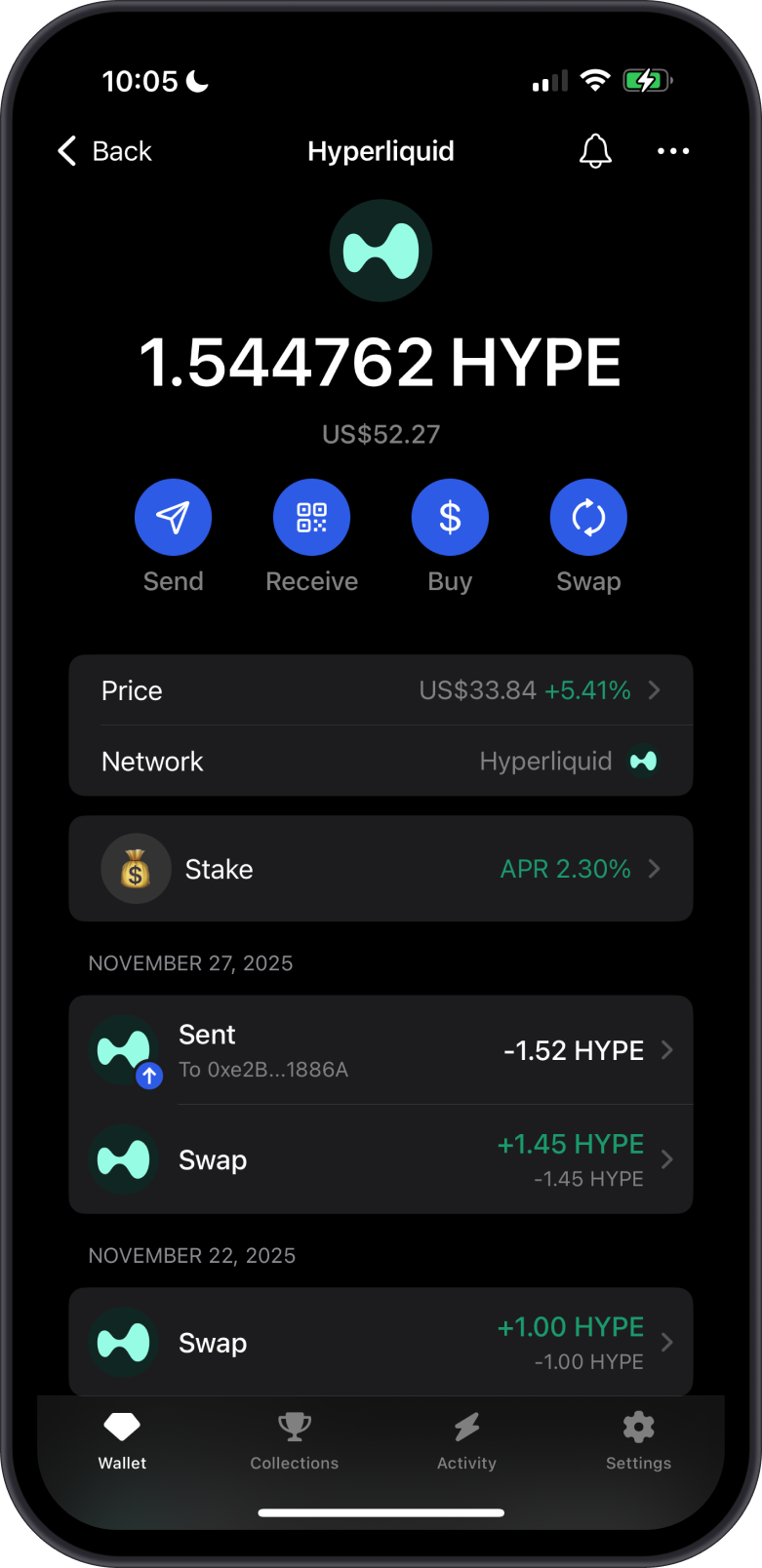
Why Hyperliquid app guide closes with verification first
Hyperliquid app guide ultimately comes down to one practical principle: mobile access is useful only when the user can verify what they are using. A phone can make Hyperliquid easier to reach, but it can also make mistakes easier to make. The same device that offers fast access also compresses warnings, confirmations, and order details into a smaller space.
Hyperliquid app guide is most valuable when it slows the process down just enough. Use the official route, bookmark the verified interface, keep wallets organized, inspect every signature, and treat app-store listings or third-party tools with caution until confirmed. Hyperliquid app guide cannot remove crypto risk, but it can help users approach mobile access with clearer expectations and a safer setup routine.
Questions and Answers
Does Hyperliquid have a mobile app for iPhone or Android?
Hyperliquid is commonly accessed from mobile through its official browser-based interface, and users should verify any native app claim through official Hyperliquid sources before installing or connecting a wallet. App-store names, logos, and reviews are not enough proof of authenticity. If you use a phone, start from the verified official domain, bookmark it carefully, and treat unfamiliar app listings with caution.
What is the safest way to use Hyperliquid on a phone?
The safer mobile workflow is to open the verified official interface in a trusted browser or wallet browser, confirm the domain, connect only the intended trading wallet, and review every signature or transaction prompt. Avoid public Wi-Fi, direct-message links, seed phrase requests, and rushed order entry. Mobile access is convenient, but small screens make careful verification even more important.
Can I add Hyperliquid to my phone home screen?
Many browser-based crypto interfaces can be saved to a phone home screen for quicker access, depending on the browser and device. If you do this for Hyperliquid, first verify the official address manually and only then create the shortcut. A home-screen icon should be treated as a convenience shortcut, not as separate proof that the interface is official or risk-free.
Which wallet should I use with Hyperliquid mobile access?
The right wallet depends on your device, security preferences, and comfort with Web3 signing. Look for a reputable self-custody wallet with clear transaction prompts, reliable mobile browser support, and easy connected-site management. Consider using a separate trading wallet rather than a long-term storage wallet. Never enter a seed phrase into a website or support chat.
Is Hyperliquid mobile trading safe for beginners?
Hyperliquid mobile access can be usable for beginners who take time to learn the interface, but trading crypto and especially perpetual futures carries significant risk. Beginners should first study order types, collateral, margin, leverage, liquidation, and funding before placing trades. Start with observation, verify official sources, and avoid trading funds you cannot afford to lose.
What should I check before placing a Hyperliquid order on mobile?
Before placing a mobile order, check the verified interface, wallet address, market, order side, size, leverage, margin impact, trigger settings, and reduce-only status if relevant. Also confirm that your connection is stable and that you can monitor or close the position afterward. A small screen can hide important context, so order review should be deliberate.